
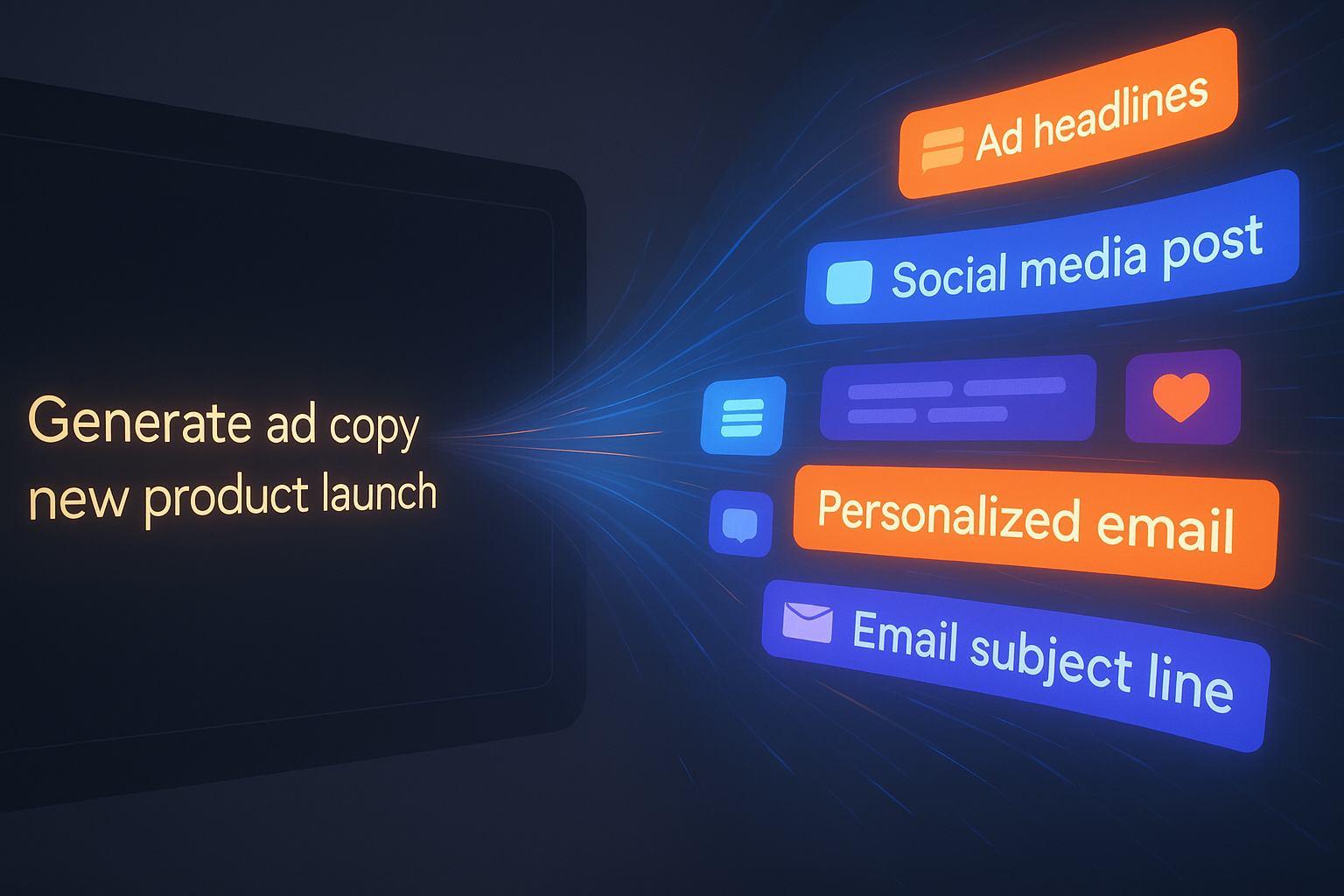
Revolutionizing Digital Marketing with AI: How LLMs Are Changing the Game
From personalized content to predictive analytics, large language models (LLMs) like GPT-4 and Claude aren't just tools—they're strategic partners reshaping the future of digital marketing.
What Are LLMs—and Why Should Marketers Care?
LLMs (Large Language Models) are sophisticated AI systems trained on vast datasets to understand and generate human-like text. They act as intelligent writing assistants that analyze data, shape brand voices, develop SEO strategies, and build complete marketing funnels—all at scale and in seconds.
Whether it's ChatGPT, Gemini, Claude, or Meta's LLaMA, these models are transforming how marketers work, create, and connect with audiences.
Key Ways LLMs Are Powering Digital Marketing
1. Content Creation at Scale
-> Blog posts, landing pages, email campaigns, and ad copy—all maintaining consistent brand voice.
-> Multi-language support for global campaigns.
-> A/B variant generation for testing headlines, CTAs, and offers.
Example: A SaaS startup leverages GPT-4 to create weekly blog posts based on trending industry keywords, allowing their human team to focus on distribution strategy.
2. SEO Optimization Made Smarter
-> Auto-suggests keywords and long-tail variations.
-> Generates SEO meta tags, schema markup, and alt text.
-> Analyzes competitor content and SERP gaps instantly.
Pro tip: Use LLMs like Claude or ChatGPT alongside tools like SEMrush or Ahrefs for augmented SEO workflows—more efficient and context-aware.
3. Hyper-Personalized Customer Journeys
-> AI creates customized emails, product recommendations, and dynamic web copy based on user personas, CRM behavior, and purchase history.
-> Dynamic chatbot scripts that learn and adapt with each interaction.
Example: E-commerce brands combine LLMs with behavioral data to craft "You left something in your cart" emails personalized to user tone, purchase history, and urgency signals.
4. Social Media & Community Engagement
-> Real-time content suggestions from trending hashtags and audience questions.
-> Auto-generation of captions, threads, and replies (maintaining brand voice).
-> Transform long-form content into engaging short formats (Reels, Tweets, Stories).
Tools: Jasper, Copy.ai, and Buffer + LLM plugins for efficient scheduling and content generation.
5. Ad Copy & Creative Generation
-> Creates diverse ad copy variations for Google, Facebook, and LinkedIn campaigns.
-> Real-time performance optimization: ad headlines that adapt to clicks, seasonality, and audience response.
Big win: Marketers now produce data-driven, emotional, and conversion-optimized ad creatives at scale.
6. Data Analysis & Strategy
-> Extract insights from customer reviews and survey results.
-> Spot patterns in competitor campaigns.
-> Generate automated campaign reports and dashboards.
Future scope: LLMs integrated with tools like Looker or Power BI for natural language querying: "Which campaign drove the most ROI in Q2?"
What About Ethics and Trust?
With great AI comes great responsibility:
-> Transparency: Disclose when content is AI-generated.
-> Bias Checks: LLMs can amplify bias—review outputs for inclusivity and accuracy.
-> Privacy: Keep sensitive customer data away from public AI models.
Marketers must balance efficiency with authenticity.
Where It's Going: Autonomous Agents in Marketing
The next frontier isn't just AI assistance, but AI autonomy:
-> Autonomous AI systems manage complete campaigns: setting goals, creating content, running A/B tests, analyzing performance, and iterating.
-> Platforms like Auto-GPT, Devin, and CrewAI are leading the development of AI-powered marketing teams.
Conclusion: From AI Tools to AI Teammates
AI—particularly LLMs—has evolved beyond novelty in digital marketing. It's becoming the core engine driving personalization, speed, scale, and strategy.
The question for marketers isn't "Should I use AI?"
It's "How deeply can I integrate it into my marketing stack?"